No Story Without Leaving Home

No Story Without Leaving Home

It’s there in the beginning – Adam and Eve left the Garden. Noah left. Abraham left. Jacob. Joseph. David. Daniel. Jonah. Joseph and Mary. Jesus. They all left.

There is no story without leaving home.

It means grieving. Even good change includes loss that needs to be grieved. Things will never be quite the same again, and it’s important to acknowledge that.

Love isn’t strong because it doesn’t change. Love is strong because it bears change, even embraces it.

Grief is a funny thing. It means both letting go and holding close. Pausing to sit, or getting a move on. Anger and peace. Hope and release.

Whatever it looks like, grief is part of stepping over the threshold to leave. Or realizing that’s what we already did without knowing it.

Leaving home also means a journey. An adventure. The unknown.

It’s risk and opportunity interwoven – you can’t get one without the other. Which is why sometimes people choose not to go, to live with the smaller story. They are afraid of the risks, and the opportunities don’t feel worth it.

But we’ll never have a capacity for love and joy greater than our capacity to risk pain and loss.

You can’t get one without the other.

The one that would save – protect – their life? They will lose it.

But in accepting the risk and the loss, we can also find life we never imagined. That’s the opportunity – to grow beyond home. To meet people, encounter ideas, face challenges we never would have known at home. And in discovering the world beyond, we will also discover ourselves, finding healing and strength and ability in ourselves we never recognized or needed at home.

There’s no story without leaving home.

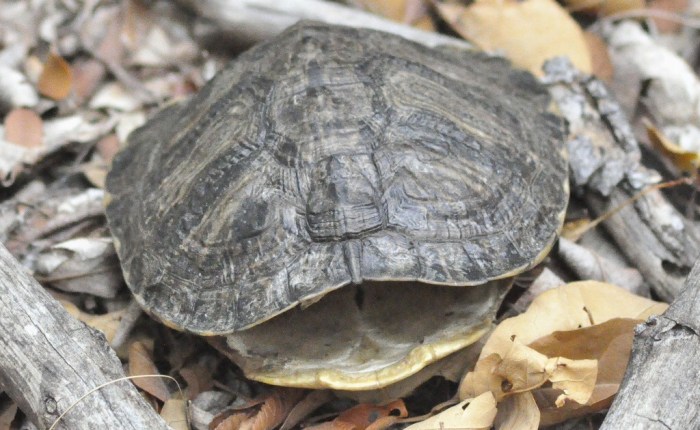
It can look like so many things, from moving out to changing paradigms. The thing is, it’s never really done. We know what it looks like for teenagers and young adults to begin to find their own way and discover who they are apart from their family. But so many of us carry home with us without even realizing, like a turtle shell we just assume is part of our very being.

Assumptions we learned from family and community when we were young just look like reality to us, and that shell of home feels like safety and security. But there are places it keeps us from going, life it keeps us from living.

There is no story without leaving home.

And it’s the journey of a lifetime.

Nothing to Prove

Nothing to Prove

I used to run because I didn’t know I could.

This year I ran because I knew – I could.

When I was growing up in North Carolina and East Tennessee humidity, my doctors wrote notes to excuse me from running in PE classes. When I ran for any distance, I’d start to wheeze like I had asthma. I didn’t, but the combination of the exertion and the air I was breathing created an allergic reaction that made me miserable.

It wasn’t until I was in my mid-thirties that I started to run at all. In the middle of a snowy Chicago winter, my seminary boyfriend (who had run the Chicago Marathon) took me to get fitted with running shoes and coaxed me into trying.

At first, I couldn’t make it more than a few blocks. We’d walk a couple of blocks and then he’d start me running again. In the biting, dry winter air, even when I started breathing hard from the exertion, I could always breathe freely. It wasn’t long before I had worked up to running a whole mile at a time, and then two.

The relationship didn’t last, but the running did (and I’ll always be grateful to him for introducing me to one of the healthiest habits of my life).

It wasn’t until more than five years later that I even thought about running more than the approximately three miles of a 5k.

An enthusiastic new friend talked me into signing up for a half marathon. That’s thirteen miles. The third weekend of July in downtown Chicago. The one time of the year the humidity approaches southern levels.

I knew it was impossible. I knew I wouldn’t be able to do it. The idea was ridiculous. But trying the training at least would be good for me.

So I started in the spring. Every weekday morning I ran three miles, and then one weekend day I did my “long” run. The first week it was three miles, then four, adding one mile each weekend. Five miles, then six – those felt challenging but doable. But once I hit seven, it felt impossible.

And each week, as I finished another impossible distance, I was doing something I couldn’t believe I was doing. I started to wonder, what other impossible things might I be able to do? What inconceivable things could I venture to attempt?

I finished that first half-marathon – ran every bit of it. I’ve run three more since. And as I proved to myself that the first year of training was no fluke, I began to discover depths of determination in myself and a comfort in my own skin I’d never known.

I’m the energizer turtle – I’m slow, but I just keep going.

Every year, as winter ends and I hit the sidewalks each morning to see what the Lake looks like at dawn, I’ve wondered, Can I really do this? I’ve run to prove to myself that yes, I can.

But this year was different. As spring came to the city, and I started to run in March, I knew I could do it. I ran because I could. I could find my feet, my rhythm, my pace. I could stretch myself, and I could go farther.

It’s a difference that’s about more than running. It’s about living, unafraid to fall because I can get back up again and keep going.

As a teenager in the middle of chaotic circumstances, my mother found herself largely on her own. She never wanted me to feel that way, so she made sure I knew that as long as I was single, I had a place at home and I didn’t have to be on my own.

That gift unintentionally left me in a place of never really trusting my ability to take care of myself. It was only after years of paying my own way and taking care of my own bills and car repairs and obligations that it finally sank in that I really could do what I’d been doing all along. Somewhere inside I could finally stop trying to prove that I could take care of myself.

I could just do it and get on with living.

Every morning as I lace up my running shoes and head out to find a path to the Lake, I’m not doing it to prove to myself that I can any more. I’m doing it because I can and I know it.

And it’s time to just get on with the living.

Engaging Transition

Engaging Transition

I’ve been engaging major transitions for over three years now.

Just this calendar year, I got a new boss, said goodbye to roommates and moved into the city, adopted a cat, started blogging, and changed jobs. Before that there were huge transitions at work, and even more in my personal life as I wrestled with my faith, changed communities, started online dating, and dealt with the reactions of friends and family to all those decisions.

A lot of those changes I chose, but many of them were thrust upon me. With both combined, it’s been quite the season of transition.

I’m grateful for the support I found and that found me in the middle of it all. As hard as it’s been – and it’s been hard – it’s called things out of me I didn’t know I had.

It’s not that I’m that different. I recognize every part of me that’s been called upon.

But I’m different. I’m actually comfortable in my skin for maybe the first time. I know the boundaries of me – where empathy and differentiation meet, where my stuff ends and someone else’s stuff begins.

Not that I think I’ve got any of that nailed down. I’m still learning and growing, still surprising myself. But I’m the best me I’ve ever been, and I’m still learning and growing, still surprising myself!

I’ve just finished three months of a new job full of major events, and as I look ahead, with all I still have to learn at work, I realized this weekend there are no new transitions in view.

I’m not sure what life looks like if I’m not managing transitions.
(That in itself feels like a major transition.)

But not a bad one. I have a lot to learn yet about stillness, but this doesn’t feel like stuckness, and that’s good.

Turning forty triggered a lot for me. It got me moving in ways I didn’t even understand and had no idea where would take me. I don’t shrink from calling it a “mid-life crisis,” but I knew from the outset I wanted it to be productive and constructive. A positive mid-life crisis, if you will, even though I’ve done a whole lot of grieving along the way.

It has been positive, thanks mostly to two components: a good therapist and the Serenity Prayer.

God, grant me the serenity to accept the things I cannot change,
The courage to change the things I can,
And the wisdom to know the difference.

I expect it’s those same things that will help me continue to learn and grow in this new season of relative stillness. Seeking wise help, and discerning what I can do and what I can’t. What I can do, and what to let go of doing.

And preparing for the transitions that will come again, sooner or later.

There’s still plenty to do.

Through the Back Door

Through the Back Door

Fundamentalism is the house I was raised in. It sheltered me and kept me warm. I was fed there and, most importantly, I was loved and learned to love there.

I was taught two foundational things in Fundamentalism that remain with me today. I was taught to love truth – “Truth never fears a challenge.” And I was taught to love Scripture – the Bible itself holds authority over any ideas we may have about it.

Those two things took me out Fundamentalism’s back door and into a world filled with the goodness and beauty of the presence of God.

The pursuit of truth taught me not to be afraid of other perspectives, of hearing other voices, other experiences, other lives. And the fruit of those lives – love, joy, peace, patience, kindness, goodness, gentleness, faithfulness, self-control – showed me God at work in the world far beyond our house.

And as I sought to understand Scripture ever more on its own terms, I found there was more there, too.

The Bible is God’s gift to us, and I want to know it for the gift it is rather than something I think it should be. Like the preeminent Word, Christ himself, it is not only divine, but thoroughly human.

It’s that thorough humanity that makes both Christ and the Bible even comprehensible to us. God in frail and vulnerable flesh and words, subject to violence and misunderstanding. It’s a thing of stunning beauty and power.

The Bible always speaks with a human voice – stories told and songs sung over and over again through generations, each speaking making them discernible to a new context.

It gives us what God intended to give, which isn’t always what we think God gave (or should have given) us. It gives us a conversation that crosses millennia. Sometimes that conversation is an argument, with different understandings of who God is and what he wants expressed. Sometimes that’s a conversation of poetry and song. It often gives us just what we would not expect.

I never rebelled. I didn’t have to blow the house up. I simply found it wasn’t big enough to contain the goodness and glory of God.

I discovered the foundations of the house I was raised in extend well beyond its walls. It’s the path of Jesus – the walls of this temple are too small, and its particulars are not what is truly important.

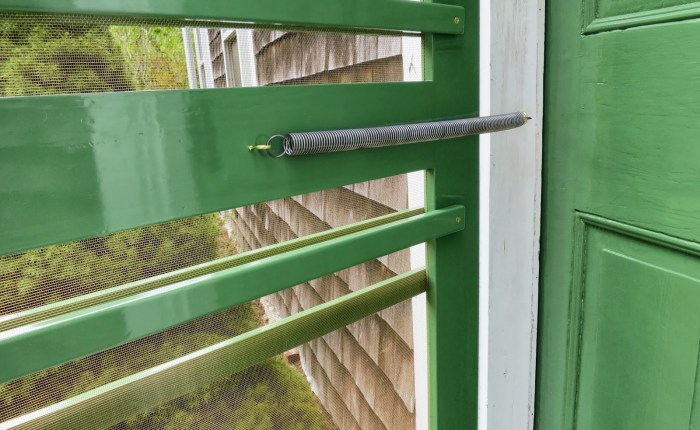
There’s a back door. A screen door that bounces and bangs behind you. Worship and life doesn’t have to stay inside – it can be transformed in spirit and in truth. Grace and joy and love are there to be found. And the foundation fills the whole earth.