Telling Our Stories

Telling Our Stories

Last Monday, I went to a storytelling open mic in my neighborhood.

I heard stories of middle school crushes and bullies (sometimes they’re the same), of fighting through remarks from family and friends to love yourself the way you are, of becoming a clown (complete with the red nose) and realizing that openly listening to and engaging with others is a lost art, of an introvert whose extroverted mother thought letting her daughter’s friends kidnap her for a surprise slumber party was a great idea, of the unexpected connections that a political canvasser made with strangers. I even told a story of my own for the first time.

Then on Tuesday I went to OutSpoken, a monthly LGBTQ storytelling event that I never leave without feeling challenged and encouraged. There were stories of finding your own identity in the face of others’ assumptions, of bad dating decisions, of respecting where others are and still challenging them to learn. And there was a powerful story from an African-American woman in her seventies about owning her life again after being raped as a child. She named the childhood stolen from her, the mark left on her soul, and claimed her life and the girl inside her.

Stories have power. Words do things.

When we tell our stories, we shape our lives. The things other people told us about ourselves, the stories family gave us – they can all be rewritten into a story that is our own. As we tell our stories we begin to learn who we really are, and as we learn who we really are, we are freed to tell our stories.

But something else happens, too. When we tell our stories, we shape other people’s lives as well.

The crazy thing about telling our stories is that even as they are asserting our individuality and uniqueness, they are also confirming our common humanity. I’ve never heard someone else’s story without finding some sliver of myself in it, of my experiences or my feelings. And that openness to commonality with people very different from me has changed me.

I love Outspoken and identify with the stories told there. They are stories of standing on the outside – of family, religion, society. And even as a straight, cisgender woman, they resonate with me. I grew up as an outsider with my peers and – even though it took me many years to understand this – with the fundamentalist community of faith I called home. I continue to come to terms with what it means to belong to a community where you don’t fit, and Outspoken has become a safe place to explore that.

Even beyond Outspoken, storytelling communities are some of the most generous and accepting I’ve ever encountered. The story being told is always more than a performance – it’s a piece of someone’s life. It’s a community that values listening and encouragement, and applauds the courage to bring what you have. Storytelling is like the potluck of life. Whatever you bring will only expand the meal!

My life was opened up by the stories I read growing up – in the Bible and in so many other books. And the stories I encounter embodied by their tellers each month continue to draw me open in new ways. I feast as I listen and always walk away full.

I’ve barely begun learning to tell my own stories. I hope they teach me how.
The Problem of Identity Politics

The Problem of Identity Politics

There’s been a lot of discussion since the election about “identity politics.” Political pundits both Democrat and Republican as well as ordinary folk are discussing the “failure” of identity politics.

I have come to see this differently.

The problem with “identity politics” is not that it goes too far, but that it doesn’t go far enough.

Those of us who are white have experienced our race as a neutral, and we have trouble connecting to the reality that the experiences of people of other races in this country is very different. Our race doesn’t matter to us (most of us, at least); why does it need to matter so much to others? It can look like they’re creating an issue unnecessarily.

But that’s actually the blindness of our position. Society hasn’t forced us to be constantly aware of our race, to shape our lives around it. We haven’t had to be be hyper vigilant about the impressions others have of our race.

Identity politics fails when it oversimplifies the experiences of an identity – when it fails to acknowledge that every person has the experiences of multiple identities intersecting in different ways.

The benefits I have because I am white and straight intersect with my experience of being treated a certain way because I’m a woman. And there are differences in the spaces I occupy as a woman – my female identity meant something different in the fundamentalist church culture I grew up in than it did in the Republican congressional campaign I worked in during college.

Other friends experience much more complicated intersections – a bisexual, black, Christian woman; a Hispanic, gay man. There are countless intersections and experiences, and it’s important to keep space for those different experiences, while understanding strategically where there are cultural and systemic issues at play with particular identities.

One problem with identity politics is that we (whites) think they are about other people. We don’t want to acknowledge our privilege (which we didn’t ask for) or accept the responsibilities that go with it, responsibilities to use a privilege we can’t simply divest ourselves of to benefit those who don’t share it (something that take humility and continual learning).

Identity politics fails when we allow it to stereotype others. It succeeds when we let it show us that others’ experiences are not only different from our own, but also different than we understand them to be.

At its best, identity politics doesn’t depend on stereotyping and setting different groups of people in antagonist positions. Whites often hear the complaints of others as turning them into the enemy. Naming what is wrong is uncomfortable for those who didn’t intend wrong yet somehow allowed it. We should instead hear a plea (or demand) for empathy, compassion, repentance, and justice.

At its best, identity politics calls us to celebrate the differences that make us strong together. It calls us to make room for the other and really listen. It calls us to give priority to minority voices – those who society has left vulnerable.

Encountering identity politics is inherently uncomfortable, even painful. Acknowledging divisions that have been there all along can feel like creating division to those of us who have been unaware.

The answer isn’t to say, “But what about all we have in common?!” Erasing uniqueness erases individuals. American doesn’t treat us all the same, and we won’t get there by insisting what makes us different doesn’t matter. We will get there by valuing our diversity for the gifts each brings.

The answer isn’t to reject identity politics. The answer is to press in deeper

Work and Pray

Work and Pray

It’s been a hard week, and I don’t expect that to end anytime soon.

I live in the most diverse neighborhood in the country. I have friends and neighbors who are afraid for their lives and their families. I’m afraid for them, too. One friend who lives a few blocks from me said she wants to wrap our neighborhood up in bubble wrap, to protect them. There’s a lot I’d love to protect us all from right now.

And I come from Trump country. I worked for a Republican in the “Gingrich Revolution” over twenty years ago. I know that many family and old friends may have voted for Trump while still disgusted by his character and words. And I know that many of them felt this kind of fear eight years ago.

Fear doesn’t have to be rational to be real.

The outward expression of my faith has changed over the past decade and a half. It doesn’t look the way it used to in many ways. Following Jesus called me down different paths than many of my family and friends who also love and follow Jesus.

I trust him with that.

And I pray. I tell him my fears and doubts and hopes and wishes and loves. And I do my best to listen.

I pray, “Thy kingdom come and thy will be done on earth as it is in heaven, even if I’m missing it altogether.” I pray, “I believe; help my unbelief!” I pray, “Father, forgive them – they don’t know what they are doing.” And sometimes, “Father, forgive them, even though they know exactly what they are doing.” I pray “Lord, have mercy!” and “Help!” a lot. And I breathe, “Thank you!”

As an only child and life-long single, who else would I talk to most of the time? I can’t ever remember not talking to Jesus. It seems he likes listening to my stuff, and he can handle my anger and doubts.

There are a lot of people talking about praying this week. And they’re not wrong – those of us who pray should be praying, for ourselves and others and for our leaders.

But we shouldn’t let our praying hold us back from doing.

Yes, everything is in God’s hands, but he’s seen fit to put a great many things in ours. Jesus prayed to sustain himself for the work. He prayed and did stuff. And he told us that after he was gone, we would do even greater things. Then he left, and now we are called “his body.”

We have a lot of his work to do. Proclaim good news to the poor, freedom for the prisoners, recovery of sight for the blind. Set the oppressed free (Luke 4:18).

For followers of Jesus, that’s our work. Whoever you voted for, this is your work.

Too many of our neighbors got a very clear message this week from white Christian America: we don’t want you. Just because that’s not what you believe or how you feel doesn’t mean that’s not the message we sent.

We’ve got a lot of work to do.

Stand with those being attacked – even if you think they’re wrong. Jesus did (John 8:1-11). Really listen to the disadvantaged, and be willing to let them change your mind (Matthew 15:21-28). Hang out with people who would never be comfortable in church. Speak up for those who are on the margins of your community. Look around – who’s missing? Find them (Luke 15).

Don’t just pray for them. Don’t just pray about it. Do the work.

Love Listens

Love Listens

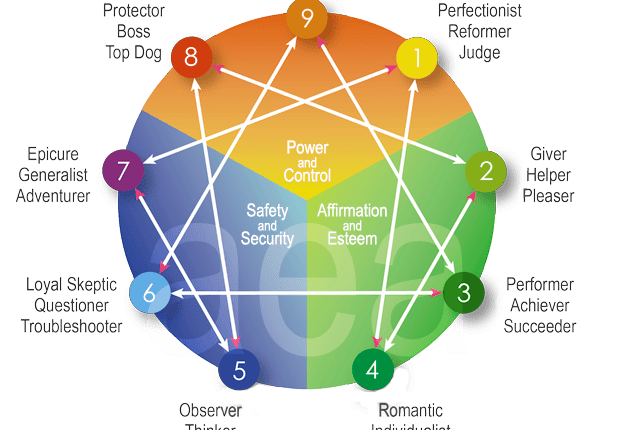
I’ve been listening to a new podcast, Suzanne Stabile and Ian Cron’s “The Road Back to You: Looking at Life through the Lens of the Enneagram.” In one episode Suzanne talks about an observation her daughter made: the Golden Rule doesn’t seem to work for my number – I treat people exactly how I want to be treated and it doesn’t always go well.

I can really relate to that. We’re all different, and different things make us feel loved, respected, safe, threatened, and afraid. There are times when a friend’s reactions leave me baffled. There are times when I feel like I’ve utterly missed something.

Tools like the Enneagram and Myers-Briggs can be wrongly used to categorize and dismiss people, but I’ve found they can also help me have compassion for those whose experience of the world is very different from my own. It’s too easy to expect others to see what I see; to understand what I understand; to feel as I do.

Some of the hardest relational challenges of my life have come when a friend decided to tell me what was going on in my heart and was at least mostly, if not entirely, wrong. It’s impossible to argue with – anything I say is going to be heard in the paradigm they’ve decided applies.

We tell ourselves a story about what’s happening and why before we even realize it, and then we respond to that story rather than the real person. At our rarest best, we’re at least somewhat wrong. It’s hard to be on either side of that equation.

There have also been times that friends have spoken into my life with deep insight, helping me see something in myself I’d missed. And sometimes the misjudgment can come from the same person who another time spoke with great perception.

It’s hardest when it does. And I’ve come to see that it’s often the relationships in which we can have the clearest insight that most tempt us to presume upon that insight.

The best insights – the truest ones, in my experience – come more provisionally, ready to be corrected. Ready to hear. They are an invitation to engage.

Tools like The Enneagram are the same. Appropriately applied, they reveal more than define or even describe. They invite us to recognize ourselves, to know ourselves more deeply, and to grow in our awareness of the various dynamics that drive us.

They also invite us to delight in the variety of ways we live in the world. We see with different eyes, hear with different ears, feel with different hearts. It’s a diversity than can isolate us, making us feel alien to one another.

Or it can expand our hearts and lives, gifting us with communities of a vast potential for creating a more just and generous world.

A world that grows as we learn to listen better to each other. To reach out to each other in ways that connect. To love each other, not only as we love ourselves, but as the one who created each of us uniquely loves each.