Lent and Messy Hope

Lent and Messy Hope

I walked home from Ash Wednesday service tonight in a gentle, soft snow. It belied the many ways my life has felt battered by the not-so-gentle over the past several weeks.

I went to a service at a church I’ve never been to, one just two blocks from my home, and I almost didn’t go. I wasn’t so sure I needed to and I was tired. And no one would know me if I went or miss me if I didn’t.

But sometime maybe that’s what we need.

The moment I stepped through the door I started to cry. Through the incense and the processions and the prayers and the bells and the readings I cried. My body knew something I didn’t yet, and it knew I needed that space to…grieve? to hurt? to be confused?

Maybe just to cry.

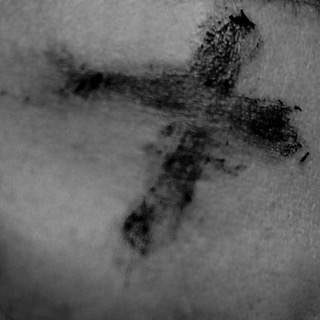
And I received the cross of ashes on my forehead – that sign of all the deaths we bear and carry with us.

And I stayed and I ate the bread and drank the wine – bread and wine that are signs of a living body that transcends death.

I can’t understand that, but I know I needed it.

Lent is a season of hope.

Lent doesn’t simply tell us that human life is full of evil and death and failure and betrayal and messing up and hurting each other.

Lent recognizing the broken things, the things that make us heartsick and heartbroken, and then goes on to tell us there is also healing and life and goodness and giving and love.

They aren’t often easy to get to and we get hurt and hurt each other along the way. Elbows and knees and words and struggles are sharp and awkward and we don’t always know what to do with them.

But this Lent, I think I need to leave space for crying and hoping. In all their messiness together. I’m not sure there’s any real substance to hope without some crying, too.

The Biggest Picture

The Biggest Picture

It was a good question.

I was sitting in a friend’s living room with a dozen or so others, and we’d been talking about faith. One friend, Michael, isn’t religious, but in his vocation as a sign-language interpreter, he spends many Sundays in a variety of different churches. He listens more carefully than anyone I’ve ever known, and works hard to (literally) embody the words he translates, and all those sermons in all those churches had left him with a question.

“If God gave his people the Bible –inspired by him in some special way, and the Holy Spirit who dwells in every Christian gives you the ability to understand it, why do Christians understand it so differently? Why do you disagree about so much?”

As I said, it was a good question. One I’ve wrestled with for years.

I grew up in a staunchly fundamentalist family and in proudly fundamentalist churches and schools, but the deeper my relationship with God grew and the more I studied the Bible, the further I’d been drawn from that context. Where God was taking me gradually went from just different to contradicting many of the conclusions and beliefs of the faith that had nurtured me.

That was hard, emotionally as well as intellectually, and I wrestled with it.

Whether they are differences in denominations or theology, we who are Christians have very different understandings of the Bible. You can parse those out by philosophical commitments or cultural biases, by tradition or personal inclination or translation, but Michael’s question holds.

Why, with one Bible and one Spirit, do we believe and live so differently?

I don’t deny that some are reading wrongly, with unexamined commitments shaping their understanding of both what Scripture is and what it says. And some may well be defiantly disregarding the Spirit to do what they want with it.

But those explanations aren’t adequate. Not when people who love and are devoted to Jesus, whose lives show the fruit of the Holy Spirit’s work, understand the Bible in such different – even opposing – ways.

I’ve seen that fruit in the lives of fundamentalists and in the lives of progressives. In the lives of Roman Catholics and in the lives of Baptists. In the lives of all kinds of people with contradictory theologies and convictions.

And I believe the witness of that fruit.

I do believe the same Spirit is at work in all of our lives. We all come from different places and are walking different journeys, and none of us are following perfectly. But following perfectly was never the point. We follow faithfully, doing our best, and God works.

I answered Michael’s question that night in the best way I knew how. I talked about my family and my own struggles with the same tensions and contradictions.

I do believe God’s Spirit is at work in both them and me, as well as in millions of other people who disagree with each other. I believe God has an end game bigger and better and more overflowing with goodness and justice and love than we can come anywhere near imagining.

We can barely catch glimpses of it from where we are. And we each come to those glimpses from such different places. But I believe Love is pulling it all together in the end, weaving what we see as contradictions into a tapestry that leaves no one out and nothing undone.

And here? Now? There are people, like my family, who are introducing people to the Love that is God that I could never reach. And, hopefully, there are people I’m helping to meet that Love who they could never make that connection with.

It’s not an easy hope, and it doesn’t resolve anything now. But I trust that there will ultimately be a resolution beyond all the ways we think about such things. That while contradictions are no illusion, there is Something bigger than the contradictions, and it’s going to make them irrelevant one day.

And I’m doing my best to trust Love and live into that future I can’t see yet.

Is God in Control?

Is God in Control?

“God is in control.”

I’ve heard that a lot recently, from people across the span of political views, and it doesn’t sit right.

We can argue endlessly (as Christians have for hundreds of years) about how divine sovereignty and human action interact. I’m not interested in that.

What I am interested in is how we are using the idea of God’s sovereignty and what it’s producing in us.

If saying “God is in control” helps us let go of obsessing over things we truly have no control over or influence on to focus on the things we can change, then it’s doing a good work in out lives.

One of the most significant things in my own life over the last several years has been taking the Serenity Prayer seriously:

God, grant me the serenity to accept the things I cannot change,
The courage to change the things I can,
And the wisdom to know the difference.

But I feel like too often in my own life, saying “God is in control” has been working in ways more destructive than constructive.

Too often it has been a way of spiritualizing passivity. I feel afraid and overwhelmed and don’t know what to do – or don’t want to do the things that need to be done. So I opt out. “God is in control. God will take care of it.”

But God generally does God’s stuff through  “the body of Christ.” That would be us. We are God’s active expression of Godself in the world. When we pray, “Thy kingdom come and thy will be done on earth as it is in Heaven,” we aren’t praying for some abstract thing to happen around us. We are asking (or should be) for something to happen through us.

That staggers me – that God would choose to use such confused and flawed creatures to accomplish his work.  But God does, and all he expects is that we do our best.

As my understanding of the world and what God is doing in it has expanded and shifted and changed, the work I feel called to do has expanded and shifted and changed as well. I embraced those changes with fear and trembling. I had to wrestle with the question, What if I’m wrong?

I could be – but I trust Jesus in my journey and do my best to be faithful. I believe Love is doing beautiful and healing things in the world and I do my best to join in that work. And every time I pray, “Thy kingdom come and thy will be done,” I add, “…even if I am missing it altogether.”

Saying “God is in control” too often minimizes our responsibility.

God gives us real choices with real impact in the world. We choose to care for the poor and the outcast, or to ignore and abandon them. We choose to fight for justice, or to assume it will happen without us.

We choose to love one another, or to turn from love.

These are real choices with real consequences and impact. God in his sovereignty has given us control. He calls us to make choices of his love, but he doesn’t intervene when we don’t.

Intervening is our job as well.

Terrible things happen in this world because we choose them. Terrible things are stopped in this world because we choose to intervene. And beautiful and loving things happen in the world because we do them.

The Jewish Scriptures lay it out quite clearly:

“Today I place before you life and death, blessing and cursing. Now choose life.” (Deuteronomy 30:19)

God in his sovereignty has given us real control. Real choices. And because God is life and love, all of creation is drawn to union with the divine source of everything good.

But we get lost, and we lose each other.

So choose life, and love. Choose finding ourselves and each other and everything good we can make of this world. Every good gift God has given us to choose.


Love in a Multiverse

Love in a Multiverse

So many things could have been different.

Everything, really.

Sometimes I think of who I might be if my daddy hadn’t died. It’s an entirely different life, an entirely different me, so different I can’t imagine.

This universe with this particular me is only one of an infinity of possibilities. So many choices –many mine and many not – have created this one. But the others are there, too.

There’s the one where I died, as I nearly did, before I was even two.

There’s the one where I went to the secular university I wanted to, a completely new world, instead of the Baptist university I’d grown up at. I wonder who I’d have turned out to be.

There’s one where the first boy I dated in my mid-twenties decided I might be his type after all and I married him as I was ready to do. I don’t doubt we could have made a good life together, a good family. But I would be a very different me – a far more conventional me.

There’s the one where the first boy I kissed didn’t have the sense to recognize that we fit in all the worst possible ways. I wouldn’t have had the sense to walk away myself, and we would’ve been a disaster.

There’s the one where I never stopped and went back to check out the book with the scandalous title – “A New Kind of Christian” – on the new non-fiction shelf at the public library. Who would I have been had I not found others were asking the questions I was? Thinking the thoughts I was? And that there was somewhere to go with those thoughts? Had I not found a path out of fundamentalism?

It gave me life but it was smothering the life out of me.

There’s the one where my seminary boyfriend wasn’t so afraid. I’d be different had we stayed together. I would’ve held myself back, and I don’t know that we could’ve made it.

There’s the one where I never got that shove into real dating. Never got past the fear of that unknown. Never found my way through the risks to know who I am and the freedom to explore who I can be.

And there’s the one where I never met you. Never was challenged by our conversations, never shaped by the dance of our friendship. Never had to figure out who I am in just the ways who you are pushed me to. Never had to think about your questions and change because of the answers. Never learned to love in the particular way you were there to love.

You’re the reason this is the universe I’m in instead of so many others that could’ve been.

(Inspiration owed to the brilliant ending of La La Land and the songwriting of Heather Styka.)