Telling Our Stories

Telling Our Stories

Last Monday, I went to a storytelling open mic in my neighborhood.

I heard stories of middle school crushes and bullies (sometimes they’re the same), of fighting through remarks from family and friends to love yourself the way you are, of becoming a clown (complete with the red nose) and realizing that openly listening to and engaging with others is a lost art, of an introvert whose extroverted mother thought letting her daughter’s friends kidnap her for a surprise slumber party was a great idea, of the unexpected connections that a political canvasser made with strangers. I even told a story of my own for the first time.

Then on Tuesday I went to OutSpoken, a monthly LGBTQ storytelling event that I never leave without feeling challenged and encouraged. There were stories of finding your own identity in the face of others’ assumptions, of bad dating decisions, of respecting where others are and still challenging them to learn. And there was a powerful story from an African-American woman in her seventies about owning her life again after being raped as a child. She named the childhood stolen from her, the mark left on her soul, and claimed her life and the girl inside her.

Stories have power. Words do things.

When we tell our stories, we shape our lives. The things other people told us about ourselves, the stories family gave us – they can all be rewritten into a story that is our own. As we tell our stories we begin to learn who we really are, and as we learn who we really are, we are freed to tell our stories.

But something else happens, too. When we tell our stories, we shape other people’s lives as well.

The crazy thing about telling our stories is that even as they are asserting our individuality and uniqueness, they are also confirming our common humanity. I’ve never heard someone else’s story without finding some sliver of myself in it, of my experiences or my feelings. And that openness to commonality with people very different from me has changed me.

I love Outspoken and identify with the stories told there. They are stories of standing on the outside – of family, religion, society. And even as a straight, cisgender woman, they resonate with me. I grew up as an outsider with my peers and – even though it took me many years to understand this – with the fundamentalist community of faith I called home. I continue to come to terms with what it means to belong to a community where you don’t fit, and Outspoken has become a safe place to explore that.

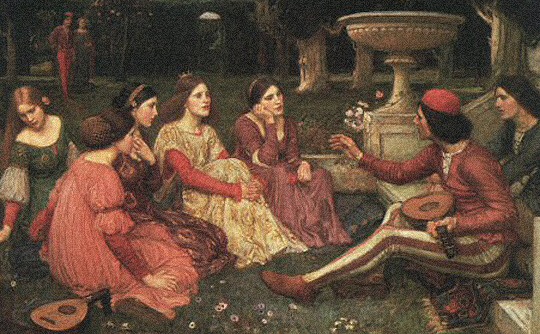
Even beyond Outspoken, storytelling communities are some of the most generous and accepting I’ve ever encountered. The story being told is always more than a performance – it’s a piece of someone’s life. It’s a community that values listening and encouragement, and applauds the courage to bring what you have. Storytelling is like the potluck of life. Whatever you bring will only expand the meal!

My life was opened up by the stories I read growing up – in the Bible and in so many other books. And the stories I encounter embodied by their tellers each month continue to draw me open in new ways. I feast as I listen and always walk away full.

I’ve barely begun learning to tell my own stories. I hope they teach me how.

The Risk of Forgetting

The Risk of Forgetting

All who love will lose.

CS Lewis, who I think missed much about love, got this right:

“To love at all is to be vulnerable. Love anything, and your heart will certainly be wrung and possibly be broken.” (The Four Loves)

Friends will fail you – not to mention themselves. Lovers will leave. The life you love will through you a curve ball. (And then another.)

Even God will disappoint – silent when shouting is called for, holding back when intervention is needed, just letting us royally mess things up.

And yet…

There is still love. It is never really love that betrays us.

Friends will still be there, even if they are new ones. Lovers show us more of ourselves and the possibilities of life. The life you love is recreated again and again.

Resurrection will always come.

And in the silence of God there are still such gifts. The sun, still obeying the word that first made it shine. Rain, still watering everything. Beauty, stubbornly decorating the world. Breath, still filling lungs when we have forgotten how. Love, still rising in the most unexpected places and ways.

The true risk of love is not in losing, but in forgetting.

Forgetting the warmth of the sun in the frigid dark of winter. Forgetting what once made us smile. Forgetting the joy, the exhilarating beauty of actually living. Forgetting what delighted us in the sheer otherness of another. Forgetting the gifts we have received.

Even when they are gone, they are no less gifts. And when they are gone, there are more to receive.

Because love is always giving. It is not a limited resource. We cannot give it all away, and there will always be more to find. In every ending, there is a beginning. One of the saints said that.

In Advent, as the Christian year is both ended and begun, Jesus is proclaimed Alpha and Omega – the beginning and the end. I think perhaps I always took that too linearly. Perhaps it means that they come together, beginning and ending. That in every beginning there is an ending, and in every ending, a beginning.

God is love – both beginning and ending and ending and beginning. But never leaving.

The world and us – we are full of such possibility, beyond what we can conceive. Love won’t forget.

The Problem of Identity Politics

The Problem of Identity Politics

There’s been a lot of discussion since the election about “identity politics.” Political pundits both Democrat and Republican as well as ordinary folk are discussing the “failure” of identity politics.

I have come to see this differently.

The problem with “identity politics” is not that it goes too far, but that it doesn’t go far enough.

Those of us who are white have experienced our race as a neutral, and we have trouble connecting to the reality that the experiences of people of other races in this country is very different. Our race doesn’t matter to us (most of us, at least); why does it need to matter so much to others? It can look like they’re creating an issue unnecessarily.

But that’s actually the blindness of our position. Society hasn’t forced us to be constantly aware of our race, to shape our lives around it. We haven’t had to be be hyper vigilant about the impressions others have of our race.

Identity politics fails when it oversimplifies the experiences of an identity – when it fails to acknowledge that every person has the experiences of multiple identities intersecting in different ways.

The benefits I have because I am white and straight intersect with my experience of being treated a certain way because I’m a woman. And there are differences in the spaces I occupy as a woman – my female identity meant something different in the fundamentalist church culture I grew up in than it did in the Republican congressional campaign I worked in during college.

Other friends experience much more complicated intersections – a bisexual, black, Christian woman; a Hispanic, gay man. There are countless intersections and experiences, and it’s important to keep space for those different experiences, while understanding strategically where there are cultural and systemic issues at play with particular identities.

One problem with identity politics is that we (whites) think they are about other people. We don’t want to acknowledge our privilege (which we didn’t ask for) or accept the responsibilities that go with it, responsibilities to use a privilege we can’t simply divest ourselves of to benefit those who don’t share it (something that take humility and continual learning).

Identity politics fails when we allow it to stereotype others. It succeeds when we let it show us that others’ experiences are not only different from our own, but also different than we understand them to be.

At its best, identity politics doesn’t depend on stereotyping and setting different groups of people in antagonist positions. Whites often hear the complaints of others as turning them into the enemy. Naming what is wrong is uncomfortable for those who didn’t intend wrong yet somehow allowed it. We should instead hear a plea (or demand) for empathy, compassion, repentance, and justice.

At its best, identity politics calls us to celebrate the differences that make us strong together. It calls us to make room for the other and really listen. It calls us to give priority to minority voices – those who society has left vulnerable.

Encountering identity politics is inherently uncomfortable, even painful. Acknowledging divisions that have been there all along can feel like creating division to those of us who have been unaware.

The answer isn’t to say, “But what about all we have in common?!” Erasing uniqueness erases individuals. American doesn’t treat us all the same, and we won’t get there by insisting what makes us different doesn’t matter. We will get there by valuing our diversity for the gifts each brings.

The answer isn’t to reject identity politics. The answer is to press in deeper

No Story Without Leaving Home

No Story Without Leaving Home

It’s there in the beginning – Adam and Eve left the Garden. Noah left. Abraham left. Jacob. Joseph. David. Daniel. Jonah. Joseph and Mary. Jesus. They all left.

There is no story without leaving home.

It means grieving. Even good change includes loss that needs to be grieved. Things will never be quite the same again, and it’s important to acknowledge that.

Love isn’t strong because it doesn’t change. Love is strong because it bears change, even embraces it.

Grief is a funny thing. It means both letting go and holding close. Pausing to sit, or getting a move on. Anger and peace. Hope and release.

Whatever it looks like, grief is part of stepping over the threshold to leave. Or realizing that’s what we already did without knowing it.

Leaving home also means a journey. An adventure. The unknown.

It’s risk and opportunity interwoven – you can’t get one without the other. Which is why sometimes people choose not to go, to live with the smaller story. They are afraid of the risks, and the opportunities don’t feel worth it.

But we’ll never have a capacity for love and joy greater than our capacity to risk pain and loss.

You can’t get one without the other.

The one that would save – protect – their life? They will lose it.

But in accepting the risk and the loss, we can also find life we never imagined. That’s the opportunity – to grow beyond home. To meet people, encounter ideas, face challenges we never would have known at home. And in discovering the world beyond, we will also discover ourselves, finding healing and strength and ability in ourselves we never recognized or needed at home.

There’s no story without leaving home.

It can look like so many things, from moving out to changing paradigms. The thing is, it’s never really done. We know what it looks like for teenagers and young adults to begin to find their own way and discover who they are apart from their family. But so many of us carry home with us without even realizing, like a turtle shell we just assume is part of our very being.

Assumptions we learned from family and community when we were young just look like reality to us, and that shell of home feels like safety and security. But there are places it keeps us from going, life it keeps us from living.

There is no story without leaving home.

And it’s the journey of a lifetime.