Coming Undone

Coming Undone

We are growing less and less intelligible to each other. Republicans and Democrats. “Liberals” and “conservatives.”

That’s hard for me.

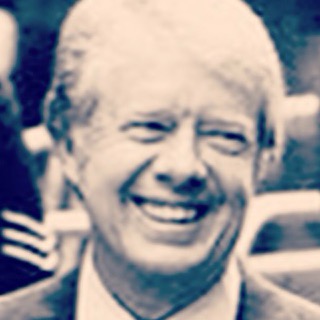
My first brush with politics came in 1976. I was four and the Democratic National Convention was on TV. I remember seeing a large group of men in dark suits moving through a huge crowd. At the center of that group was a warm, smiling face I immediately liked. My mother told me it was Jimmy Carter.

It wasn’t just that his was the only smiling face (it was), but it was the quality of that smile. Warm and and gentle and personal and welcoming – something a four-year-old instinctively recognizes. I knew he was a loving man, and I think forty years has only proven that intuition true.

At the same time, a beloved great aunt was a long-time volunteer for Jesse Helms, and for years my favorite sleepwear was a yellow, extra-large t-shirt that dragged the ground and read “Student Leaders for Jesse Helms” on the front and “Give ‘Em Helms!” on the back.

Before I started school, I’d spent hours at a travelling Lincoln exhibit that came to our mall – I remember his glasses, and a plaster cast of his huge, gnarled hands. I asked endless questions. FDR and Eleanor fascinated me as well, after I watched a miniseries about their life together (and apart). We visited his “Little White House” in Warm Springs, Georgia when I was in first or second grade, and I soaked in the paradoxes of his life.

I wasn’t fascinated by these men as presidents, but as people. As history that I could somehow reach back and touch. My earliest encounters with politics weren’t about division.

But I also grew up alongside the Moral Majority, and in my family, as the 70s became the 80s and 90s, it was increasingly a given that there was only one right position on anything political.

In college, I worked for a Republican candidate for Congress. He was a warm, genuine man of integrity and conviction, and while I’ve come to reconsider many of the positions we fought for, I do not regret our friendship or my support of him.

I remember spending one long Election Day holding a sign outside a polling place. The older gentleman doing the same for the opposition and I struck up a collegial conversation and eventually came around to the topic of abortion. As we talked, I realized we were really talking about two different things. That one act – a woman walking into a clinic to get an abortion – had totally different meanings to each of us. Both of us were motivated by love for people we didn’t even know, and the conversation undid something in me. I listened, and he made me think about things more broadly. Love began to have more complicated implications.

Twenty years later, the lesson I learned that day has only held and deepened. My own politics have changed, not because I found out most of the things I believed then weren’t true, but because as I’ve continued to listen to an ever broader diversity of people (love always begins with listening), I found out lots of other things were also true.

The thing that changed most for me wasn’t truth; it was priority. What has shifted most for me is what I believe is most important. What I love.

Caring for and protecting the vulnerable – those on the social or economic margins. The orphan, the fatherless, and the widow. The stranger and immigrant. The refugee. The person treated with suspicion because of the color of their skin. The prisoner. The poor. The worker being taken advantage of. Those who’ve been ostracized because of who they love, or mocked because of their gender expression. Those whose voices are dismissed.

Giving love, creating beauty, and finding peace for all of them.

And I don’t know one conservative who would disagree that any of that is important.

What we have come to see differently is what comes first. How to go about it. What the necessary foundations are that will result in the care and protection of the vulnerable. That will bring more goodness into the world. What it is that gets in the way.

Some of that difference stems from a theological and political commitment to the principle of either individual responsibility or communal responsibility, and which takes precedence – a tension rooted in the founding of this nation.

But we no longer see those who hold the other position as equally committed to the common good, as equally committed to love.

As I sit writing this in my favorite neighborhood sidewalk café, an apparently homeless man called to a waiter and asked if he could order a cup of chili, some cornbread, and a slice of onion to go, which he had the cash to pay for. (The slice of onion is a detail that sounded like home to me.) The young waiter started to say yes, when another employee told him no, he couldn’t.

I was upset, wondering why this man, however unconventional, couldn’t be allowed to order his meal.

Then I saw someone else from the restaurant, not the wait staff, come out and sit down beside the man. He spoke to him respectfully and with kindness for several minutes, and when he got up to come back inside the restaurant, it was clear the order was coming.

And I am ashamed of how quick I am to doubt another’s commitment to the common good, to loving the uncomfortable other.

It seems it’s who we’ve become: so ready to believe the worst – of those we disagree with, in particular. So afraid of what our world might become (or maybe of really seeing what it was all along). So slow to love and quick to reject.

Our differences are real. Our fears are real (even the ones that don’t turn out to be so rational).

Love is stronger, if we can let it undo us.
Abandoning the Shoes that Brought Me Here

Abandoning the Shoes that Brought Me Here

There’s a poem I’ve been living with for the last couple of months. Written by David Whyte, it’s about a pilgrimage in Spain, Camino de Santiago or The Way of St. James, and the traditions that have arisen at its end at Finisterre:

The road in the end taking the path the sun had taken,
into the western sea,

and the moon rising behind you
as you stood where ground turned to ocean:

no way
to your future now but the way your shadow could take,
walking before you across water, going where shadows go,

no way to make sense of a world that wouldn’t let you pass
except to call an end to the way you had come,
to take out each frayed letter you brought
and light their illumined corners, and to read
them as they drifted through the western light;
to empty your bags; to sort this and to leave that;

to promise what you needed to promise all along,

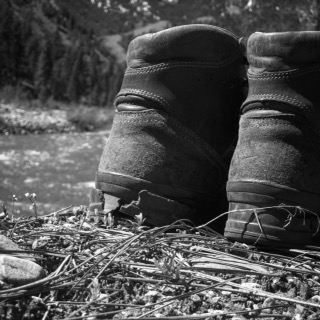
and to abandon the shoes that had brought you here
right at the water’s edge, not because you had given up
but because now, you would find a different way to tread,
and because, through it all, part of you could still walk on,
no matter how, over the waves.

from Pilgrim, copyright 2012 Many Rivers Press

My family is hardcore fundamentalist. I often tell people that they believe Jerry Falwell started to compromise along the way. It’s funny (not to them), but true. They didn’t jump on the anti-gay bandwagon in the 90s; my step-father built it in the 80s.

They taught me many things.

They taught me that God’s love was great and that he had committed himself to working certain ways, within certain boundaries.

That’s the thing about fundamentalism (and much of Christianity that wouldn’t describe itself as such) — it’s not just people that are inside or outside those boundaries. God’s work is inside them, too, and his only work outside those boundaries is to call people to come inside them to him.

They also introduced me to Jesus and taught me to do what he wanted me to do no matter what they or anybody else thought.

And I followed Jesus to places that stretched them. I went to seminary and got an MDiv at a scary “neo-evangelical” school. I started preaching a little. And they rolled with it.

But then I saw Jesus dancing on the other side of the boundary line, and I knew what it would mean to cross that line, to follow him there. In the end, it was no choice really — of course I would follow him.

But I didn’t know how. The shoes that had brought me here weren’t made to dance, much less walk on across the water.

I didn’t begin to know how to walk across that line.

So with the help of a friend, I began to walk along it — to get to know a community of LGBTQ followers of Jesus who were trying to figure things out themselves. I listened, for months. Some of them came to trust me enough to honor me with the gift of their stories and struggles. They grew to be family to me.

They gave me space to learn to take off my shoes, to learn to walk without them. To let old ways of understanding and believing and relating die, and new ones be born and grow.

And one day, after about a year, I looked around and realized I’d left the line far in the distance. I’d taken off my shoes to find the ground on which I was standing was holy.

That moment was beautiful and terrifying.

I knew what it would mean. I knew that for many of my family and friends, crossing that line meant they would rewrite the story of Jesus in my life as a delusion — if the path had led me here, it had to be false.

And that meant that so many people I love, whose fingerprints I’m proud are on my life, who gave me the shoes that brought me here, would no longer be home for me. Elders whose voices brought deep wisdom to my life would not advise me going forward.

I’d found a new family, new elders, but they will never be replacements.

The shoes that brought me here still mark the water’s edge. They are well worn to the shape of my feet and journey. And they stand empty there in testimony that there is yet more beyond.

…to abandon the shoes that had brought you here
right at the water’s edge, not because you had given up
but because now, you would find a different way to tread,
and because, through it all, part of you could still walk on,
no matter how, over the waves.

Wading into the Wild Goose

Wading into the Wild Goose

Tomorrow I’ll head out for the hills of western North Carolina and the Wild Goose Festival (named for the Celtic symbol of the Holy Spirit).

Five years ago, when I went to the Goose for the first time, I had no real idea what I was getting into. I realized pretty quickly that I was one of the most conservative people there.

That’s not true this year — hasn’t been true for the past few years.

Wild Goose did not begin the journey for me — that happened something like 15 years ago in North Carolina when I picked up a new non-fiction at the library called A New Kind of Christian.

Or 20 years ago when I first became friends with some Presbyterians and learned that there’s not just one “right” way to read Scripture.

Or nearly 30 years ago when fundamentalist missionaries I was visiting in France explained how culture contextualized their understanding of the morality of wine.

Or 35 years ago when I stumbled onto Madeleine L’Engle’s A Circle of Quiet and first encountered a woman who loved Jesus and looked nothing like Christians I knew.

Or when I first learned to read and enter others’ stories and lives and see a world of endless perspectives.

I’m not sure our journeys ever “begin,” but there are moments that shift something, that change something. That take all the things that came before and reorder them into new realizations and new ways of seeing.

Wild Goose gave me a space, for four days each summer, to dive into that. To live beside and walk with and listen to and share beauty and grief and pain and joy with people who lived very different lives and fought very different battles than I had.

And, it turned out, some from remarkably similar places.

Wild Goose is a spiritual refugee camp for a motley collection of people who, for a host of reasons, find themselves outside the lines traditional Christianity has drawn.

Having that space each summer opened me up. It gave me the space to ask questions, of myself as much as others. And it prepared me to dive into a different kind of community at home and be changed by it.

Wild Goose showed me Jesus obliterating the lines, loving and walking with people in all sorts of journeys, just wading in.

And I waded in after him. I’m looking forward to wading in deeper this year!

(That’s the back of my head in the picture!)

Risking the Bet

Risking the Bet

I made a big change today. It’s become a bit of a thing for me in the past couple of years — making changes.

If I want my life to be different, but I’m not willing to change anything, nothing’s very like to change.

But the thing is, change means risk. The bigger the change the bigger the risk.

Today, I left my job of seven years and a lot of people I love.

When you let something go in order to pick up something different, that something different may end up being a bust. It could blow up in your face. And even if it’s good change, there’s loss to grieve.

Opening yourself up to something new is a risky bet. Whether it’s a new job, a new home, a new relationship, or new territory in a friendship , there’s a lot to lose.

And we develop defenses around these things. My emotional brain spends a good amount of time telling me things like, “We’re doing WHAT?!?!? What the heck are you thinking??? Don’t you know what could happen here?”

That’s really the kicker — what could happen. The way life has gone before and the way that has taught me, consciously and not, that it will always or at least usually go.

My emotional self doesn’t trust me. Sometimes so much that it tries to take the wheel, even fights me for it.

But my rational and spiritual self has learned (is still learning) that every day really is new. That I can make different choices and impact the way things go. That would could happen isn’t what has to happen.

And so much is on the line. Joy is on the line. And life. Beauty and growth and possibility. Love is on the line.

We will never be more open to love and joy and life than we are open to pain and loss. You can’t guard against loss without also guarding against all the good things.

New life is there for us, but we always have to open our hands and let go of something we know to receive it.

In two weeks I start a new job. I don’t know where it might take me, how it might challenge and change me. But I’m excited for the possibilities, for the room to grow further into who I’m made to be. For good things I haven’t imagined.

The more I let go to reach out for something new, the more my emotional self learns there are more possibilities. She’s learning to relax, at least a little. To trust me and trust the good things. She’s learning that on the other side of loss, there’s always the possibility of new life. That while the unknown is still scary, it’s also full of beautiful surprises.

She’s learning to risk the bet.