Love Listens

Love Listens

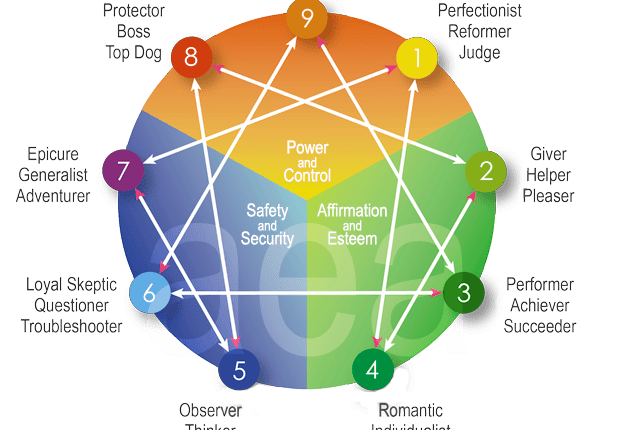
I’ve been listening to a new podcast, Suzanne Stabile and Ian Cron’s “The Road Back to You: Looking at Life through the Lens of the Enneagram.” In one episode Suzanne talks about an observation her daughter made: the Golden Rule doesn’t seem to work for my number – I treat people exactly how I want to be treated and it doesn’t always go well.

I can really relate to that. We’re all different, and different things make us feel loved, respected, safe, threatened, and afraid. There are times when a friend’s reactions leave me baffled. There are times when I feel like I’ve utterly missed something.

Tools like the Enneagram and Myers-Briggs can be wrongly used to categorize and dismiss people, but I’ve found they can also help me have compassion for those whose experience of the world is very different from my own. It’s too easy to expect others to see what I see; to understand what I understand; to feel as I do.

Some of the hardest relational challenges of my life have come when a friend decided to tell me what was going on in my heart and was at least mostly, if not entirely, wrong. It’s impossible to argue with – anything I say is going to be heard in the paradigm they’ve decided applies.

We tell ourselves a story about what’s happening and why before we even realize it, and then we respond to that story rather than the real person. At our rarest best, we’re at least somewhat wrong. It’s hard to be on either side of that equation.

There have also been times that friends have spoken into my life with deep insight, helping me see something in myself I’d missed. And sometimes the misjudgment can come from the same person who another time spoke with great perception.

It’s hardest when it does. And I’ve come to see that it’s often the relationships in which we can have the clearest insight that most tempt us to presume upon that insight.

The best insights – the truest ones, in my experience – come more provisionally, ready to be corrected. Ready to hear. They are an invitation to engage.

Tools like The Enneagram are the same. Appropriately applied, they reveal more than define or even describe. They invite us to recognize ourselves, to know ourselves more deeply, and to grow in our awareness of the various dynamics that drive us.

They also invite us to delight in the variety of ways we live in the world. We see with different eyes, hear with different ears, feel with different hearts. It’s a diversity than can isolate us, making us feel alien to one another.

Or it can expand our hearts and lives, gifting us with communities of a vast potential for creating a more just and generous world.

A world that grows as we learn to listen better to each other. To reach out to each other in ways that connect. To love each other, not only as we love ourselves, but as the one who created each of us uniquely loves each.
Through the Back Door

Through the Back Door

Fundamentalism is the house I was raised in. It sheltered me and kept me warm. I was fed there and, most importantly, I was loved and learned to love there.

I was taught two foundational things in Fundamentalism that remain with me today. I was taught to love truth – “Truth never fears a challenge.” And I was taught to love Scripture – the Bible itself holds authority over any ideas we may have about it.

Those two things took me out Fundamentalism’s back door and into a world filled with the goodness and beauty of the presence of God.

The pursuit of truth taught me not to be afraid of other perspectives, of hearing other voices, other experiences, other lives. And the fruit of those lives – love, joy, peace, patience, kindness, goodness, gentleness, faithfulness, self-control – showed me God at work in the world far beyond our house.

And as I sought to understand Scripture ever more on its own terms, I found there was more there, too.

The Bible is God’s gift to us, and I want to know it for the gift it is rather than something I think it should be. Like the preeminent Word, Christ himself, it is not only divine, but thoroughly human.

It’s that thorough humanity that makes both Christ and the Bible even comprehensible to us. God in frail and vulnerable flesh and words, subject to violence and misunderstanding. It’s a thing of stunning beauty and power.

The Bible always speaks with a human voice – stories told and songs sung over and over again through generations, each speaking making them discernible to a new context.

It gives us what God intended to give, which isn’t always what we think God gave (or should have given) us. It gives us a conversation that crosses millennia. Sometimes that conversation is an argument, with different understandings of who God is and what he wants expressed. Sometimes that’s a conversation of poetry and song. It often gives us just what we would not expect.

I never rebelled. I didn’t have to blow the house up. I simply found it wasn’t big enough to contain the goodness and glory of God.

I discovered the foundations of the house I was raised in extend well beyond its walls. It’s the path of Jesus – the walls of this temple are too small, and its particulars are not what is truly important.

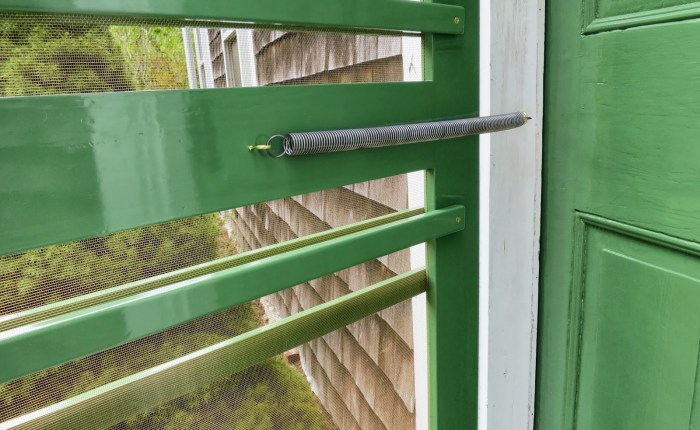
There’s a back door. A screen door that bounces and bangs behind you. Worship and life doesn’t have to stay inside – it can be transformed in spirit and in truth. Grace and joy and love are there to be found. And the foundation fills the whole earth.

Joining in the Dance

Joining in the Dance

For a couple of years before I moved to Chicago, I attended a church in North Carolina that, in retrospect, taught me more than four years of seminary.

It was a remarkable community, with a pastor and teacher whose influence still marks my life. And between his teaching and example, and the group of friends who formed an unusually close housegroup together, my theology became clarified and grounded.

By the time I got to seminary, I knew that the Trinity and the Incarnation formed the crossbars of how I thought about and engaged God and the world.

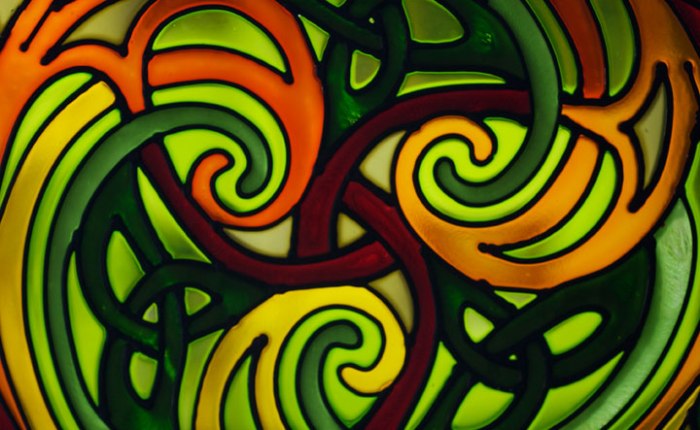
Hunter, my pastor, spoke of the Trinity as a circle dance (the Greek is perichoresis) – and perhaps because of his penchant for playing the bohdran and telling Irish tall tales, that circle dance always looked like a Celtic knot to me, strands of relationship and movement intimately interwoven.

The beauty of this reality is that the trinitarian circle dance embraces all of creation, and particularly you and me.

God, the three in one and one in three, is love – not the idea of love, but the very act of loving. Parent, Child, and Spirit are eternally loving, and that love expresses itself in creation and embrace. Always including.

Even in the Garden, after the fruit of judgement had been eaten, it is the man and woman who hide and God who seeks them. It is not God who is in need of reconciliation, but we who are in need of convincing that we are already in the divine embrace, fully accepted and loved.

The Trinity intertwines around and within us – “I am in my Father, and you are in me, and I am in you,” Jesus says.

And yet we run. We hide. We hide from acceptance and love in all our trying to find worthiness or an explanation for it.

Love needs no explanation.

All the while the dance encircles us, inviting us to join the dance of love that leaves no one out.

Richard Rohr and my friend Mike Morrell have written a beautiful new book about the Trinity called The Divine Dance. Mike gave me an advance copy this summer and I’ve loved the way they explore the Trinity.

“God is not just a dancer; God is the dance itself.”

It’s the dance of the universe – solar systems and planets held in a dance together in relationship with each other. Protons, electrons, and neutrons dance together in every cell within us and at the furthest curve of creation.

All of creation reflecting the Creator – who dances with us all, if we can open our ears to the music, feel the rhythm beating in our hurts and in our hearts, and let it sweep us away.

Here, Part 2 – A Conversation Cont.

Here, Part 2 – A Conversation Cont.

“I’m here.”

-“Yes. I’m glad.”

“I’m not sure why I’m here, but I am.”

-“I know.”

“I love these people. At least some of the time, I’m here because of them.”

-“That’s a good reason.”

“And I have history with these words, but…”

-“Yes?”

“Sometimes I wonder if it’s all really just empty – a big, old empty building, however beautiful.”

-“You’re here.”

“I am.”

-“So it’s not empty.”

“Technically, no.”

-“And if you’re here, that means I’m here, too.”

“Yeah…and I still don’t know what that means.”

-“I know, and that’s okay.”

“I’m trying, but I’m not always sure I know what the point is anymore.”

-“Showing up.”

“Showing up is the point?”

-“Can’t that be enough?”

“What do you mean?”

-“When you show up, really show up, you bring all your needs and desires and gifts with you.”

“I do, but I don’t know what to do with those needs. I don’t know what you do with those needs.”

-“I know. It’s part of the mystery of trust – that in the midst of that not knowing you still show up.”

“Does it really matter?”

-“It’s only when you show up that others can meet you in your need, and that you can meet them in theirs.”

“Yes, that matters. Even if I always wish we could do more.”

-“And that’s where I am.”

(Pause)

“What do you mean?”

-“You are my Body, broken one for another.”

“The bread…”

-“Yes. When you take the bread, don’t miss discerning my Body. That’s where I am.”

“Each other…. I think we mess up really seeing each other on a regular basis.”

-“Yes, but showing up is the beginning.”

(Pause)

“Breaking hurts.”

-“I know it does.”

“Is it really worth it – being broken for each other? Does it do any good?”

-“No one avoids it. That’s why I came, and that’s why I’m in the broken bread, too.”

“But where’s the good? For you or any of us?”

-“In the love that spills out, if you let it.”

“In the love….does love always have to mean breaking?”

-“It did for me.”

(Pause)

“Alright.”

-“Alright what?”

“I’m here. I still don’t understand, but I’m showing up and saying yes.”

-“I’m glad. I like your company.”