Naming God for Who God Is

Naming God for Who God Is

“…and you enjoy being loved by God.”

They were passing words from a pastor who was counseling me — not even his point. But something in my mind got caught in them and stayed there while we finished the session. Something inside me that said quietly and without the least drama, “But I don’t.”

Oh.

God loved me. That was as basic a fact in my world as my mama and daddy’s love for me. It wasn’t something it had ever occurred to me to question.

But somehow, in thirty years of life and being loved by God, it had also never occurred to me that I should be enjoying it.

Being loved by the Creator of the universe, the God without whom nothing was, the God who was sovereign over everything that happened (including daddies dying, injustice, abuse, bullying, starving, war,…), the God who gave and took away, the God who made all things work for the good of those who love him?

That was something to be enjoyed?

I trusted God with everything in me I knew to trust with, but something inside me still braced.

You can make yourself do a lot of things, but one thing you cannot make yourself do is enjoy. And I knew the reality that I didn’t enjoy being loved by God meant something was seriously messed up.

I had no idea what to do about it. I didn’t know how to fix it.

But I knew there was a problem somewhere in what I believed, consciously or unconsciously or both, and I became willing to put everything I thought I knew on the table.

I didn’t do it all at once. It was a step at a time. Years in which momentum slowly grew in ways I didn’t really understand. But it started with recognizing that as I had grown up in the church, I had learned to redefine a lot of things — things like love, joy, and peace. These were all things we experience when we know Jesus. I knew Jesus, my (mostly) unconscious mind reasoned, therefore love, joy, and peace must be what it was I was experiencing.

Depression and anxiety got suppressed, redefined, and ultimately, when they were undeniable, blamed on purely physical factors. “I know a peace I don’t feel.” I’d actually said those words and meant them.

It had to be better than this, I decided, or it was just a farce. “It” being life with God, following Jesus, being a Christian.

And over the years, as I let go of a lot and looked for love, goodness, and beauty, it did get better. I wrestled through some really hard stuff and came through it with a relationship with God that was deeper than ever. Something in me relaxed, and I wasn’t bracing any more.

And then a year or so ago, for no apparent reason, the prayers and creeds and words in church started to trigger bracing in me — the instinct to draw back and distance myself. The same words of the liturgy that had been so healing for me for so many years became painful.

It was the word “God” that was doing it. “God,” “Father,” “Christ.” Most any word that referred to deity except “Jesus” triggered in me a reaction to a God I no longer believe in — a God who demands death, a God who turns his back, a God who cuts some people off, a God who is willing to sacrifice a child for the sake of his plan.

Not the God of love, joy, peace, patience, kindness, goodness, and faithfulness. Not the God who

is love.

It hurt. I missed the presence I’d found in those words. I also realized I wasn’t just going to be able to get them back. I had to move through this, not back away from it.

So I started replacing the word “God” in the prayers and affirmations of the liturgy with the word, “Love.”

It was a revelation. I hadn’t realized how much my mind and heart still held of a god who isn’t Love.

I did the same thing with hymns, and the first time I sang Patrick’s Breastplate the new way, I couldn’t stop crying.

“I bind unto myself today

the power of Love to hold and lead,

Love’s eye to watch, Love’s might to stay,

Love’s ear to hearken to my need,

the wisdom of my Love to teach,

Love’s hand to guide, Love’s shield to ward,

the word of Love to give me speech,

Love’s heavenly host to be my guard.

Love be with me, Love within me,

Love behind me, Love before me,

Love beside me, Love to win me,

Love to comfort and restore me.

Love beneath me, Love above me,

Love in quiet, Love in danger,

Love in hearts of all that know me,

Love in mouth of friend and stranger.”

There is no perfect way to approach the holy, the divine. But, love, we have been told, comes closest.

“Beloved, let us love one another.

For love is of God, and everyone that loveth is born of God and knowers God.

He that loveth not knoweth not God for God is love.

Beloved, let us love one another!”

(1 John 4:7-8)

So I’m still learning to know God, to grasp what is at the heart of the universe.

And to enjoy being loved.
Astray

Astray

I recently spent some time with an old friend who has come to believe that God blesses same-sex relationships. They are navigating what that means for their work and ministry in evangelicalism, and that’s not an easy path. I know that all too well.

Shortly after I became publically outspoken in my own advocacy for LGBTQ+ folk, I was challenged by a close family member. “I have to hold you accountable to the truth,” they said. “You are endangering not only your own life, but also the lives of others.” It wasn’t a novel thought. It’s something I was taught in church from a young age: we are to some degree responsible for the choices of those around us.

It’s why we had “accountability groups” and mentors at church. In some cases, it was a big part of the reason we had church. And like many parts of religion, it got something wrong and something right at the same time.

The something right? “No man is an island.” Our lives and choices affect those around us. And we can be blind to our own issues. It’s wise to be in community and to open our lives up to trusted friends.

The something wrong? We tended to create a culture in which we treat each other more like children of the communal parent than adults. Our individual identities can be surrendered to a group identity that cannot be questioned, and our well-being can become dependent on the lives and choices of others. We can see ourselves as having something not unlike a parental responsibility for others.

Many people have influenced me throughout my life, from my parents and other family members to pastors, teachers, authors, and friends. For most of my life that was primarily fundamentalists, and they gave me foundations and tools that are still a valuable part of my life today. Increasingly, I’ve learned from folks outside fundamentalism, people who invited me to listen and think and learn. And no matter how much I cannot imagine being where I am today without them, they are not responsible for the choices I have made.

For all they have given me, I’m the one who had to choose what to keep and what to leave, and what to build with what I’ve received.

In the years since my own convictions about gender, sexuality, and marriage shifted, I’ve had several friends make a similar journey. Some of them have had a front row seat to my own life. My story has become a part of their journey, and that has never failed to bring those words about accountability and responsibility to my mind.

If anything good in my life has influenced others, I’m humbled and grateful, but I honor the choices we each have to make for ourselves. One person’s faithfulness does not always look like another’s. If everyone’s story looked like mine, something would be very wrong.

The responsibility we have in community is to share our lives and at the same time give each other the freedom to live our own unique stories. It’s not unlike being adults functioning well in a family together. We can be invested in each other’s lives without needing those lives to look a certain way. That’s not always easy – when you see someone you love making decisions you are convinced are wrong, you want to stop them. Maybe you’re right (we tend to think we are), or maybe not, but your life is not my story to write even if you choose to share it with me.

Love is not control or manipulation or relational blackmail. Love looks more like Jesus than that.

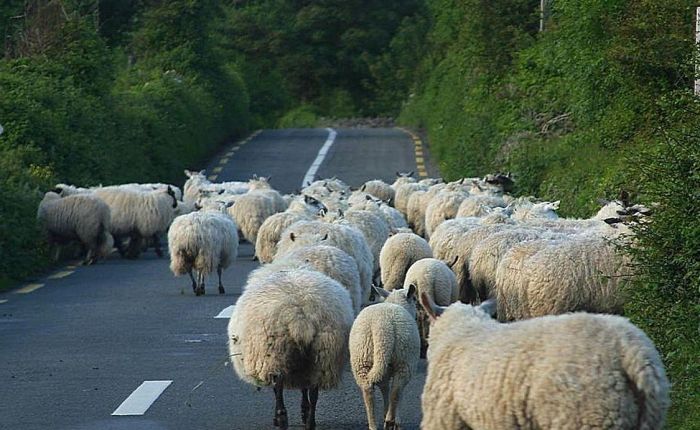
There are people who love me who are desperately convinced I have gone astray. In a sense, they’re right – I have certainly “strayed” from the particular path they are sure of. But I hope I’ve strayed in the steps of Jesus and only closer to the love of God. And the love of God has many paths, and the footsteps of Jesus venture into all kinds of unlikely places.

Here, Part 4 – A Conversation Cont.

Here, Part 4 – A Conversation Cont.

“Ah! Here.  And…you’re here.”

-“I am. You sound surprised, yet not.”

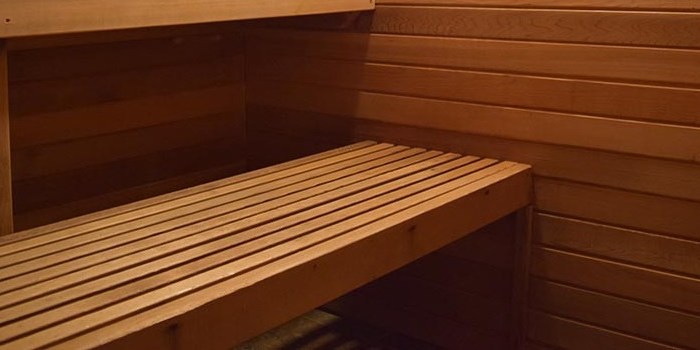
“Well…the dry sauna at the athletic club?”

-“Don’t you read the Psalms?”

“The Psalms?…

Oh! ‘If I make my bed in hell.…’ Very funny.”

-“I thought you’d be amused.”

“But, …seriously?”

-“Seriously, it’s the quietest place I know.”

“Really? What about churches and chapels?”

-“They’re loud with expectation and desperation.”

“Oh. I can see that. And here…

well, it may be the only place that even my mind is quiet.”

-“Exactly. Everything is remarkable still in here.”

“There’s something about the heat.”

-“Yes. It brings your mind and body together to be present with each other.”

<pause>

“That’s not always a comfortable place for me.”

-“I know.”

“There’s a lot I don’t want to feel that directly.”

-“Yes.”

“I’ve lost my dreams.”

-“Lost?”

“Well, I’m pretty sure I know where they went, but they’re gone.”

-“Yes, sometimes people walk away with our dreams whether they intended to or not.”

“I just know I went to find them last week and there was nothing there.”

-“I’m sorry.”

“Thank you….

I’d ask why you didn’t stop them, but I’m long past thinking that you push people around like that.”

-“There’s no love under compulsion or manipulation.”

“Right.”

<pause>

“You know, I never know where these conversations are going to go when they start.”

-“Neither do I.”

“Really?”

-“Yes. They’re something we create together.”

“I like that.”

-“I’m glad.”

<pause>

“So what do I do about the dreams?”

-“What do you think?”

“Well, they didn’t die – then I could bury them or burn them. They just…left.”

-“Do you think they’re coming back?”

“I want to a lot of the time. But I think that’s clinging to something that’s gone, and even if they did come back, they wouldn’t quite be the same.”

-“That makes sense. Nothing that’s alive ever stays the same.”

“I don’t know what to do with the space they left.”

-“What do you want to do with it?”

“Not lose it.”

-“Why not?”

“Because…it’s part of the shape of who I am now, and I like who I am now.”

-“I like who you are now, too.”

“That’s good to hear. I don’t want to lose that.”

-“So you feel stuck between new dreams and losing who you are?”

“Maybe?…

There aren’t really any new dreams taking root. I have plenty of wishes flying around, but new dreams – not so much.”

-“And the wishes?”

“Most of them are connected with the dreams that are gone. Some of them still mean something on their own, and that’s good, but they aren’t the sorts of things that turn into dreams.”

-“Ah. I see.”

“What? What do you see?”

-“I see you.”

“You do?”

-“I do.”

<pause>

“Maybe that’s enough for the moment. I don’t know….

Can that be enough for the moment?”

-“It’s why I’m here. If you make your bed in hell…”

“You’re here.”

-“Yes.”

Where’s Sunday?

Where’s Sunday?

The symbols and rituals of Holy Week and Easter have not resonated with me this year the way they used to.

Easter has always been my favorite holiday, ever since I was a little girl perched up on a tombstone in the church graveyard for the Sunrise Service and playing in the mountain cemetery where my father was buried under the shadow of three crosses.

Easter always meant something to me, but it became much more of the celebration I felt it should be when I encountered the Anglican liturgy and traditions of Holy Week. Growing up Baptist, we’d tended to squeeze the cross and resurrection into one service on Easter morning, but once I had the opportunity to walk the journey of Jesus through the week of services designed to do just that, it all became even more deeply meaningful to me.

Part of me misses that, because now they don’t resonate the way they used to. But it’s not because I’m numb to them. It’s that other things – things that are part of life today – resonate more vividly now.

Instead of swords in a garden at night, what resonates now is shots in a grandmother’s backyard.

Instead of the betrayal of a kiss, it’s the legal fiction of equality.

Instead of Pilate washing his hands rather than defy the religious authorities, it’s refusals to prosecute and jury acquittals.

Instead of a cross to terrorize all who would defy the status quo power of empire, now it’s a gun.

There is one ritual – one symbol – that still hits me like a punch in the gut: the stripping and washing of the altar at the close of the Maundy Thursday service.

It’s always felt out of place to me at that point in the week, rather than at the close of the Good Friday service. It so vividly evokes the stripping and washing of Christ’s body. The Pietà. A mother holding the body of her murdered child. Washing the body of her child who should not be dead.

That still resonates. Too many mothers. Too many dead children.

Where’s Sunday?

We’ve put resurrection off for them, left the putting right to a final judgement after this life. But even if that’s what’s out there in the great beyond, it shouldn’t be the answer for today, for here. It doesn’t let us off the hook for all we refuse to see and acknowledge, much less put right.

We’ve turned the “first fruits” of resurrection life into an abstract future, discontinuous from this world, that we aren’t responsible for making with the lives we’ve been given.

I suspect that’s why I’m having trouble connecting with most of the symbols and rituals of Holy Week. Life has disrupted my ability to feel the abstract as deeply, to project the story of Jesus over our heads and into a future that’s out of our hands.

In our hands is exactly where God has entrusted the future, God help us.

God’s intervening through us, or He’s not, because we’re too invested in the status quo to cooperate. God’s making all things new through us, or He’s not, because we don’t like what we don’t know. God has “so much more to say” to us, but He’s not, because we’re convinced He gave us everything He had nearly 2000 years ago.

Where’s Sunday? I’m pretty sure we’ve buried it somewhere where it won’t cause any trouble.

I say, let’s go digging. What have we got to lose?